
We Demand Return
Of land, artifacts, cultural items, and freedom from censorship

Dear Readers,
I wake up angry. I go to sleep angry.
I see our neighbors swept like trash from one street to another, and I’m angry. I see our relatives seeking asylum from countries disrupted by neocolonialism and Western extraction in tents outside an Econolodge purchased by King County for unhoused people, and I’m angry. I see food prices skyrocketing, early school closures, and the impending collapse of healthcare systems, and I’m angry. I see a genocide live-streamed on my phone, and I’m angry. I walk around my neighborhood and see a sticker proclaiming, “Jewish students aren’t going anywhere. We’ll fight, then we’ll eat bagels” - cutesy Zionist propaganda, joking about enjoying bagels while people in Gaza are being starved by Israeli genocide.
And I’m furious.
I began writing this newsletter after Memorial Day weekend. If you’re in the United States, you either opened up a crowded inbox after a short-lived three-day weekend or were recovering from customer-indentured servitude in retail/hospitality service hell. There’s little room for an in-between, the middle class shrinks into a knife-thin edge between the owning class and the working class.
If you’re a Palestinian in Rafah or a visiting aid worker, you experienced one of the worst Israeli onslaughts in May. Because Israel likes to coordinate the most insidious of its attacks during American holidays while America enjoys the bread and circuses.
Readers, I’m angry. I’m angry that my community on Turtle Island is grinding our lives away, suffering, while our hard-labored tax dollars go towards another settler colony across the world to bomb innocents. I’m angry that we’re blatantly lied to while the horrifying evidence is right there on our phones.
Readers, I am furious at the colonial propaganda press keeps churning - producing despicable articles like The Atlantic’s article The UN’s Gaza Statistics Make No Sense right after the Memorial Day attack on Rafah.
Written by Zionist Graeme Wood, the article first criticizes data points gathered by the UN on the exact death toll - calling into question how the harm of this genocide should be quantified. Then it referred to the Gaza Ministry of Health as the “Hamas Ministry of Health” and called into question its “shifting accounting labels” - not like Gaza’s public health officials are also impacted by Israel’s attacks or that it’s difficult to quantify death totals when bodies are buried in mass graves by the IDF.
But the line that caused a viral backlash was this: “Even when conducted legally, war is ugly. It is possible to kill children legally, if for example one is being attacked by an enemy who hides behind them. But the sight of a legally killed child is no less disturbing than the sight of a murdered.”
Readers, you and I both know: There is no difference between harming a child “legally” or otherwise. There is no circumstance - in war or otherwise - that justifies the murder of children. Only monsters knowingly and intentionally harm children.
Since The Atlantic’s article and its unconscionable quote have proliferated the internet, another - saner, kinder, truer - quote by James Baldwin has made its rounds.
“The children are always ours, every single one of them, all over the globe; and I am beginning to suspect that whoever is incapable of recognizing this may be incapable of morality.”
These words were published in Baldwin’s essay in The Nation, Notes on the House of Bondage. In it, Baldwin writes three days before the 1980 presidential election and in it, he speaks about the election’s abysmal choices of candidates - Jim Carter and Ronald Reagan, the latter who is the chief architect of today’s “trickle-down economics” that enrichened the already rich and fucked the rest of us.
Here we are, 43 years later. Months away from the 2024 presidential election, graciously given by our oligarchs the same ancient, decrepit criminals as our presidential election.
I offer you one more quote from Baldwin’s Notes on the House of Bondage:
“One can speak, then, of the fall of an empire at that moment when, though all of the paraphernalia of power remain intact and visible and seem to function, neither the citizen-subject within the gates nor the indescribable hordes outside it believe in the morality or the reality of the kingdom anymore-when no one, any longer, anywhere, aspires to the empire’s standards.”
This newsletter took much longer to write than anticipated. It no longer felt true to my heart to write lighter entertainment pieces or solely about updates for current book projects. With insidious writers like Wood and articles and newsletters glorifying Israel and US imperialism all over the internet, this newsletter needed to become more.
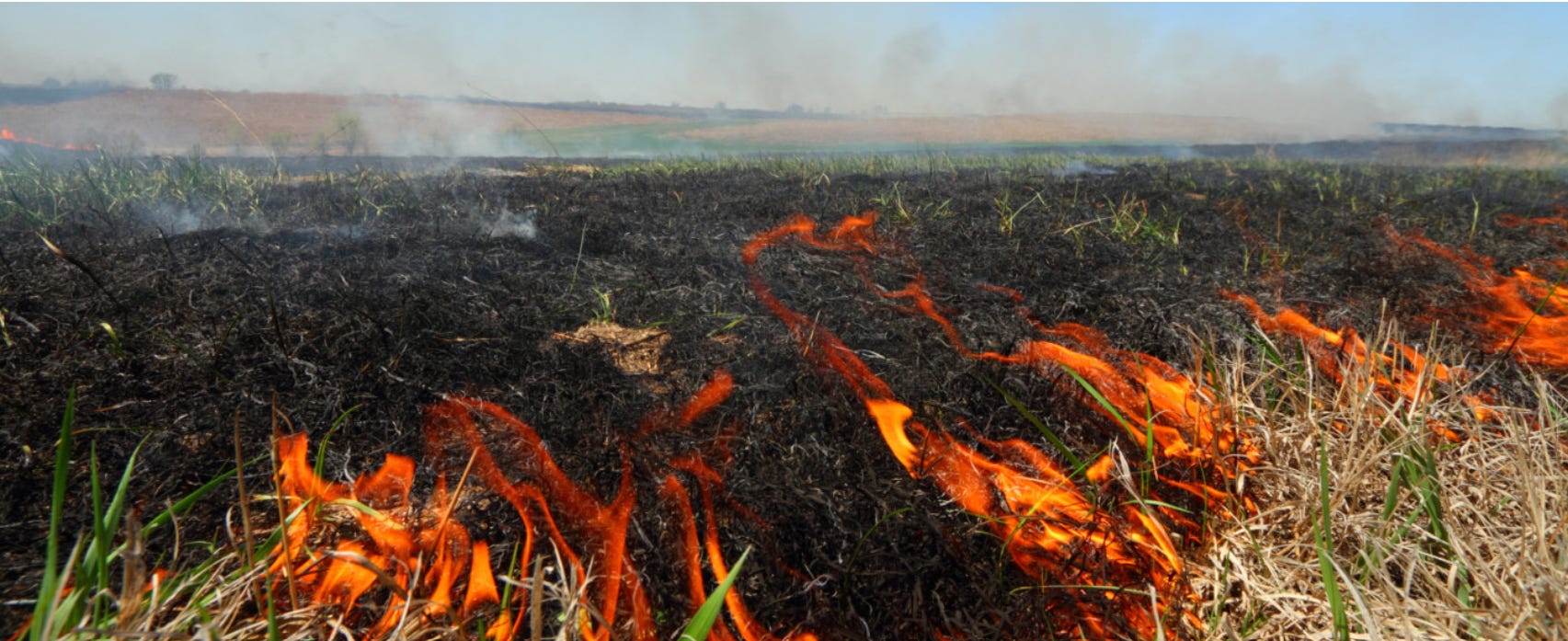
Readers, we’re angry - and that’s a good thing. Anger is what incites change. Anger is fire, and fire is medicine. Fire plays a critical role in ecology - burning down the old and making way for the new.
I grew up on the wide open prairies in the Kaw Nation’s traditional lands, witnessing spring prairie burns across the Flint Hills. When I moved to Coast Salish lands, I was exposed to forest fires for the first time - the consequence of extraction and lack of reciprocity with the land. These wildfires wreck ancestral forests and displace animals but in destroying human habitat, it forces action.
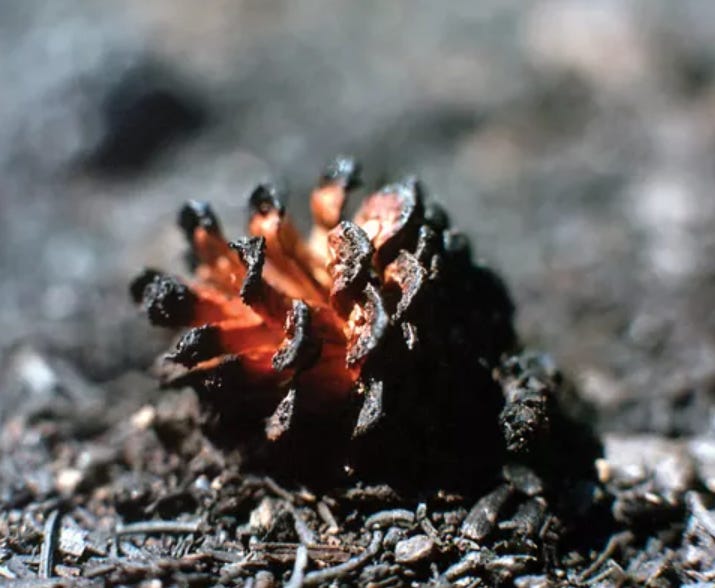
Some seeds wait years for fire before they wake from their dormancy and germinate. The systems that be are already heating our climate and setting fire to our lives. My aim for this newsletter is to share seeds of collective resistance and revolutionary optimism, stories of resiliency and power-building. Hence the name change.
Welcome to seedgiver.
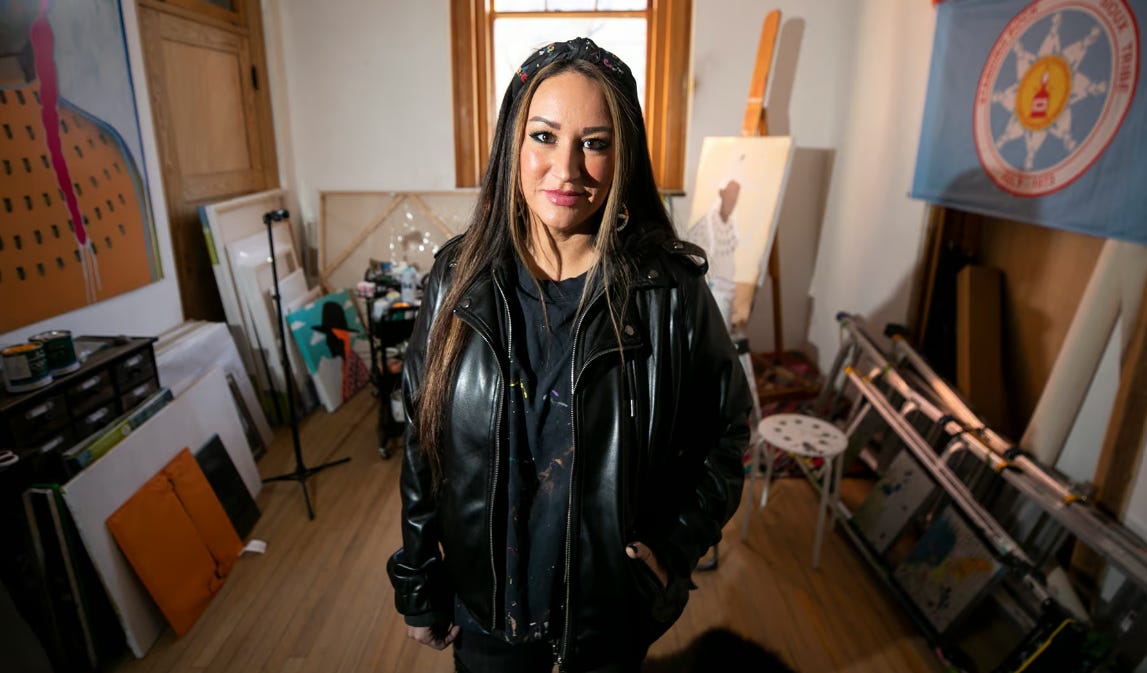
Danielle SeeWalker is Húŋkpapȟa Lakȟóta citizen of the Standing Rock Sioux Nation. Based in Denver, she is an activist for Indigenous people and dedicated to her community. SeeWalker serves as a City Commissioner for the Denver American Indian Commission. She was pivotal in the Prohibiting American Indians Mascots being signed into state law, making Colorado the third state to do so, and she advocated for SB22-150 - establishing Colorado’s Missing & Murdered Indigenous Relatives Task Force. She co-founded The Red Road Project which documents the stories of Native America through words and visual media. SeeWalker is a storyteller herself, recently publishing Still Here: A Past to Present Insight to Native American People and Culture. She is a mother of two sons, a curator, a businesswoman, and an all-around badass.
SeeWalker is also an artist - the second to be invited to join Vail, CO’s newly formalized residency program this summer.
Zionists decided otherwise.
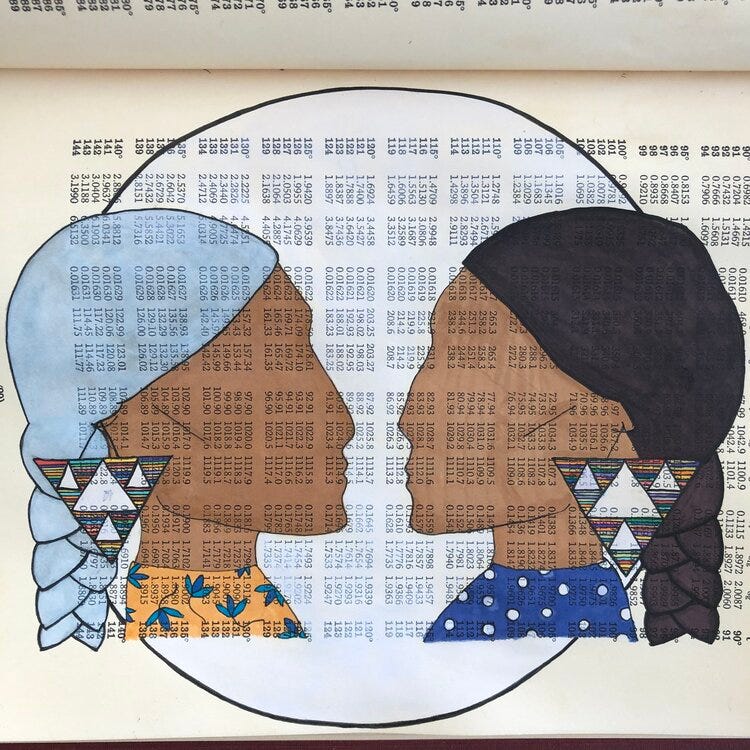
In January this year, Vail’s Art in Public Places approached SeeWalker about joining their Summer 2024 Artist in Residence program. It’s a program that Vail had been building towards for decades, and finally piloted in 2023.
“I was really excited at this opportunity to represent the Native American community in a good way,” SeeWalker shared on her Instagram. “I did a site visit, made agreements, & had everything in place. I even turned down other job opportunities because of this opportunity. I was committed.”
SeeWalker was promised a studio space, stipend, multiple community engagement opportunities including work with local youth, a photography exhibit for the Red Road Project, and a public mural with creative control in Vail Village - a popular tourist spot in the ski resort town. However, SeeWalker neither had the chance to submit a proposal for the mural nor did she even have a chance to discuss it in full with Vail officials.
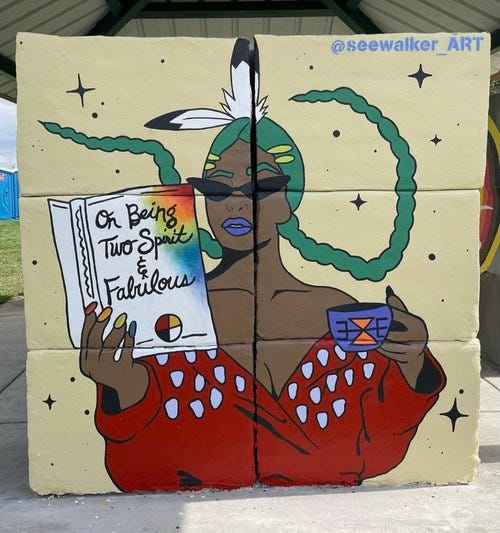
Just three days after Vail announced on May 6, SeeWalker received a phone call from Vail’s deputy town manager Kathleen Halloran. The call lasted less than two minutes, as Halloran talked over SeeWalker: Her residency was canceled.
Why?
“We started getting messages from individuals looking closely at her social media posts,” Vail town manager Russell Forrest shared with the Colorado Sun. “The concern was around the very polarizing issue in Israel and Gaza right now.”
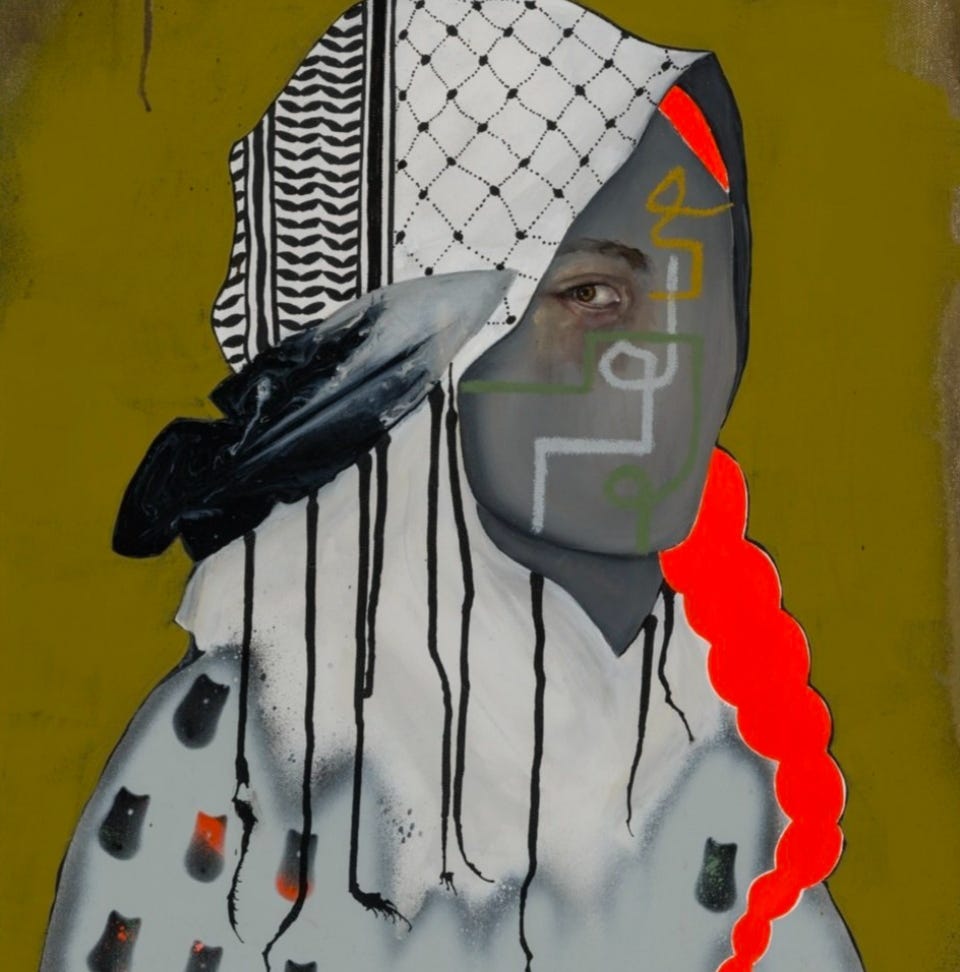
There are two posts on SeeWalker’s remotely related to Palestine since October 7th, both with the same image: SeeWalker’s painting G is for Genocide.
“It’s about erasing a culture, about taking land. Me as an Indigenous person, this is what happened to my ancestors,” SeeWalker shared about G is for Genocide, created in recognition of the parallels between the ongoing settler colonialism in Turtle Island and Palestine. Limited edition prints of the piece, including hand-embellished ones, were even sold to fundraise for the UN Crisis Relief Fund. “The piece is not about taking sides, it’s about humanity, it’s about not destroying a culture and letting people live.”
There should be nothing “polarizing” about this. There should be nothing controversial in saying murdering tens of thousands of people is evil. There should be no other “side” to take. Nearly 9 months since October 7th, you would think that most people could conceive such basic morality and maybe educate themselves on Palestine and Zionist settler colonialism.
Not in Vail, Colorado!
The below statement from Vail came just three days after its public announcement that SeeWalker had been selected for its art residency program (now removed). Read that again, one more time: Three days.
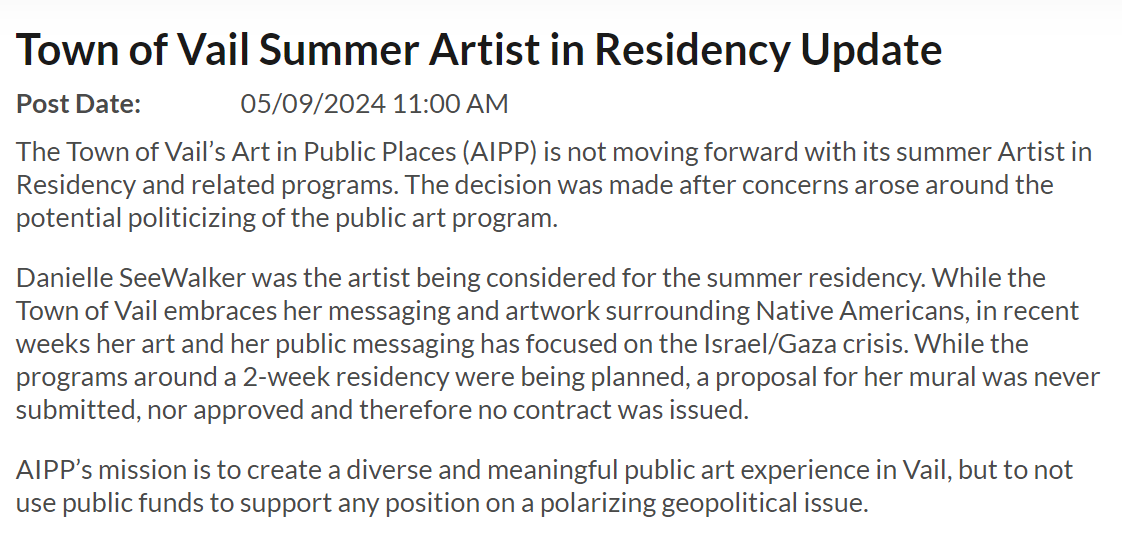
No, I am not referencing my last newsletter. I am emphasizing three days, writing out the literary equivalent of shaking your shoulders and shouting THREE DAYS, because it only took that much time for Vail’s over-privileged residents to search through a Native woman’s social media accounts, ignore her accomplishments as an artist or the good she’s done for our community, laser in on two Instagram posts out of over 800, and throw a bitch fit that she dared to care about children being murdered.
Three days - and a Native woman artist was blindsided and abruptly removed from a public art program.
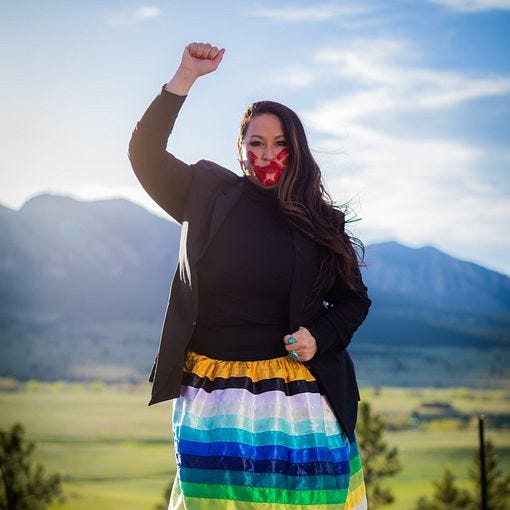
With classic neoliberal talking points, Forrest defended the Town of Vail’s decision in an interview with Rocky Mountain PBS: “We’re an inclusive community and everything about us is about being inclusive. Doing something that polarizes a component of the country, the world, or our community just wasn’t deemed appropriate.”
So inclusive that the town of 4,636 (94% white) has - by my count during a brisk Google search - six wealth management firms. Eagle County exceeded $3 billion in home sales in 2020 with the average Vail home sale being $1.29 million. According to Zillow, Vail’s housing market has risen to $1.74 million in 2024. This makes Vail the second richest small-town area in the United States. In neighboring Garfield County, the average home value is $668, 871, and just four hours south, Costilla County’s median household income is less than $35,000.
My question for Russell Forrest is not why Vail unceremoniously dropped SeeWalker. No, I want to know this: How much money was involved in the decision?
Also, Russ, you can say the word inclusive as many times as you want and click your heels together, but it won’t magically transport you out of the land of delusion to one of inclusion.
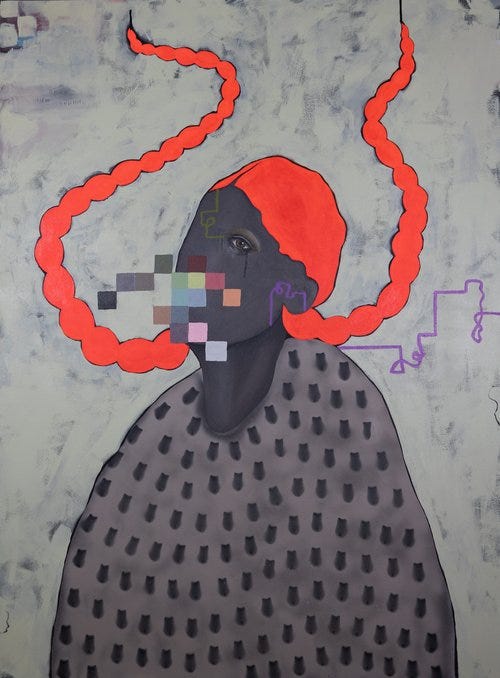
After their piss-poor decision made national headlines and went viral, Vail released an official non-apology for the “inconvenience” of announcing SeeWalker’s residency before a mural had been proposed (despite SeeWalker actively asking for their expectations before the announcement) or a contract being put in place (there was a contract, signed by SeeWalker). Vail officials held themselves accountable to their shareholders constituents, saying they suspended the residency program to “reexamine its approach” and develop “robust and specific guidelines” - aka red tape that will likely create more barriers to future artists from marginalized communities their residency.
The cherry on top: “We are a welcoming and inclusive community for all.”
Hang tight, Toto. We’re going to be in the land of delusion for a long, long time.
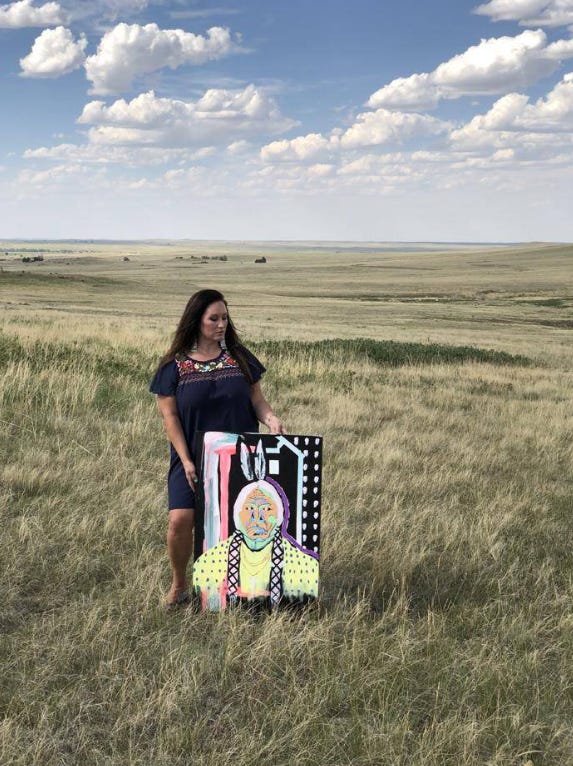
As we established earlier in this newsletter, SeeWalker is a badass and this experience did nothing to deter said badassery. She has been vocal from the start, using this experience to speak out against white supremacy.
“The residents of Vail need to be reminded that they live a comfy, luxe, and privileged life on STOLEN LAND,” SeeWalker stated. “Also, I’ll never be silenced.”
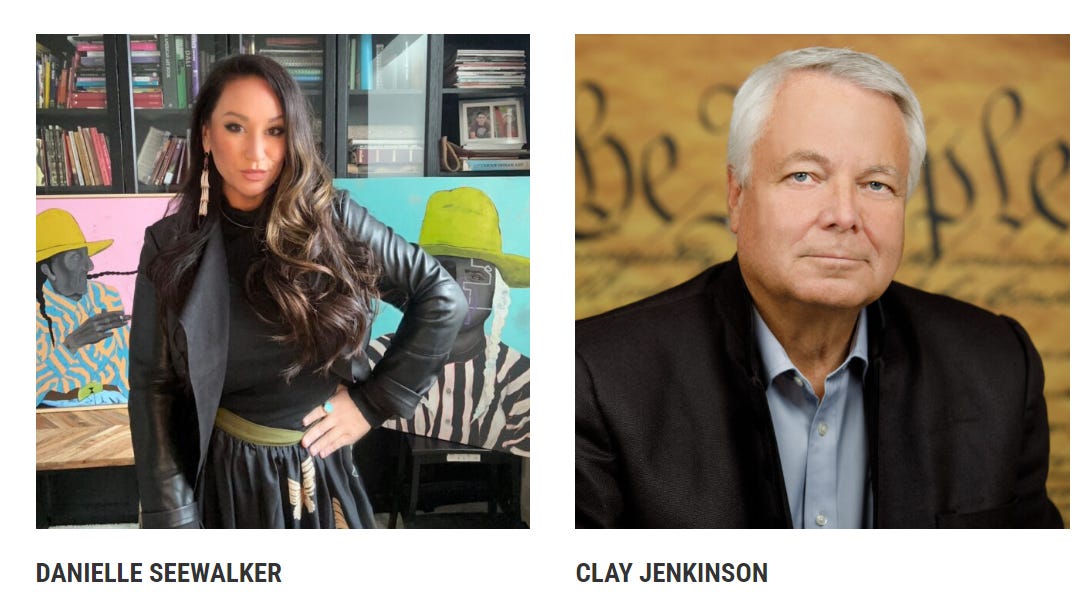
SeeWalker will join the Vail Symposium on June 19th for an artist talk at the (insert eye roll) Vail Golf Club. The artist talk will be hosted by historian Clay Jenkinson who himself was featured as a speaker at a previous Vail Symposium event, sharing his research on former US President Theodore Roosevelt while - I shit you not - cosplaying as said president (please, please, click this link - the man legit cosplayed and looked like fucking Milburn Pennybags). Given Roosevelt’s history as a colonizer and his take on Indigenous people, choosing Jenkinson to host SeeWalker’s artist talk is…a choice. And on Juneteenth, too. Keep it classy, Vail!
In a recent post, SeeWalker clarified that she has not accepted payment for this event. “I have only agreed to do this talk to have a voice in a community that tried to silence and censor me. I am doing this talk to demonstrate resiliency and discuss my artwork. Those that know me, know that I don’t back down and won’t ever be silenced.”
If you are a Colorado resident, please consider attending the event in person to support Danielle SeeWalker. For us folks miles away, the artist talk will be live-streamed.
Tickets can be obtained here.
While supporting SeeWalker, bear in mind that this is not an isolated incident. Many artists creating critical work to raise awareness about Israel’s genocide in Gaza and speaking up for Palestine as a collective are being censored. This is especially so for Palestinian artists. Entire exhibits, programs, museum shows, film festivals, and participation in poetry festivals have been canceled worldwide due to Zionist pressure.
Censorship will only accelerate as the movement for a free Palestine grows.
Now more than ever, we must support artists. Go to their exhibits. Attend gallery openings. Invest in their work. Share their portfolios. Read their books. Listen to their talks.
Perhaps consider picking up a pencil yourself.
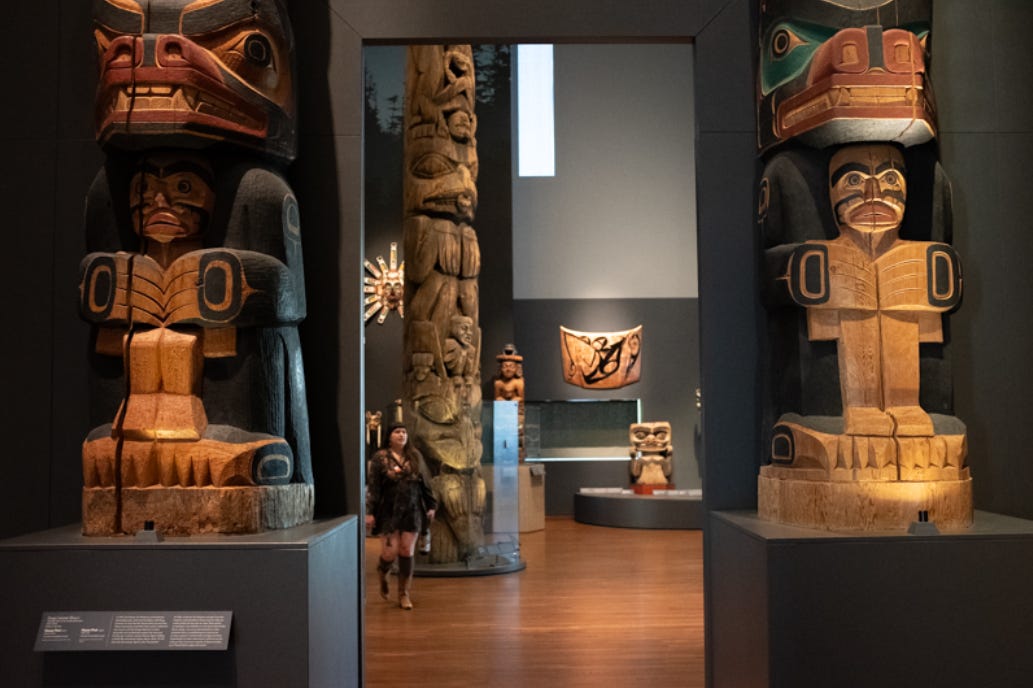
Knowing incredible Indigenous artists in Colorado like Danielle SeeWalker, I have an honest question for the Denver Art Museum: Why the fuck are you still withholding Indigenous peoples’ cultural items?
Pause, slow down, rewind. Let’s review some history.
The Native American Graves Protection and Repatriation Act (NAGPRA) is the culmination of decades of advocacy, finally passed in 1990 after centuries of cultural plundering and grave-robbing. NAGPRA requires that federal agencies and any institutions receiving federal funding must account for any sacred objects, items of cultural patrimony, funerary objects, and yes, even human remains in their possession. (A pause while writing, as I take a moment to think about how fucking creepy that is. Why are so many museums so fucking creepy?)
The best part about NAGPRA is its requirement that sacred items and ancestors must be returned to their people, and repatriated to Tribal Nations’ care where they will be honored in that tribe’s ceremony. NAGPRA even outlines steps for consultation and collaboration between federal agencies, museums, and Tribal representatives and communities.
NAGPRA’s only drawback: those goddamn loopholes. Yes, institutions receiving federal funding are required to abide by NAGPRA - which unfortunately exempts hoarders from private collectors - but only what institutions can account for. It also leaves tribes without federal recognition out in the cold entirely.
Cue crocodile tears about the lack of funding to accurately evaluate and identify every item in inventory. Or the argument that some items don’t “technically qualify”. Or the excuse that some items are so old, that there’s “no way” to determine which tribe they belong to. Or outright refuse because technically, the remains “predated the arrival of Europeans in the region in 1673, citing no reliable written records during what archaeologists called the ‘pre-contact’ or ‘prehistoric’ period.” Or simply dismiss oral histories, discounting their credibility in favor of the written word. Or make excuses that no tribe has officially requested repatriation, so no need to take action.
Or the sheer size of some of these collections. Harvard’s Peabody Museum of Archaeology & Ethnology alone has repatriated 4,439 ancestors and 10,209 funerary belongings. But that is merely 44% of the 10,118 Indigenous ancestors held by the Peabody Museum. This number does not include the remains of at least 19 Black people who were enslaved and then used after death to support racist pseudo-science.
Only 10 institutions hold half of ancestors still unreturned to tribes.
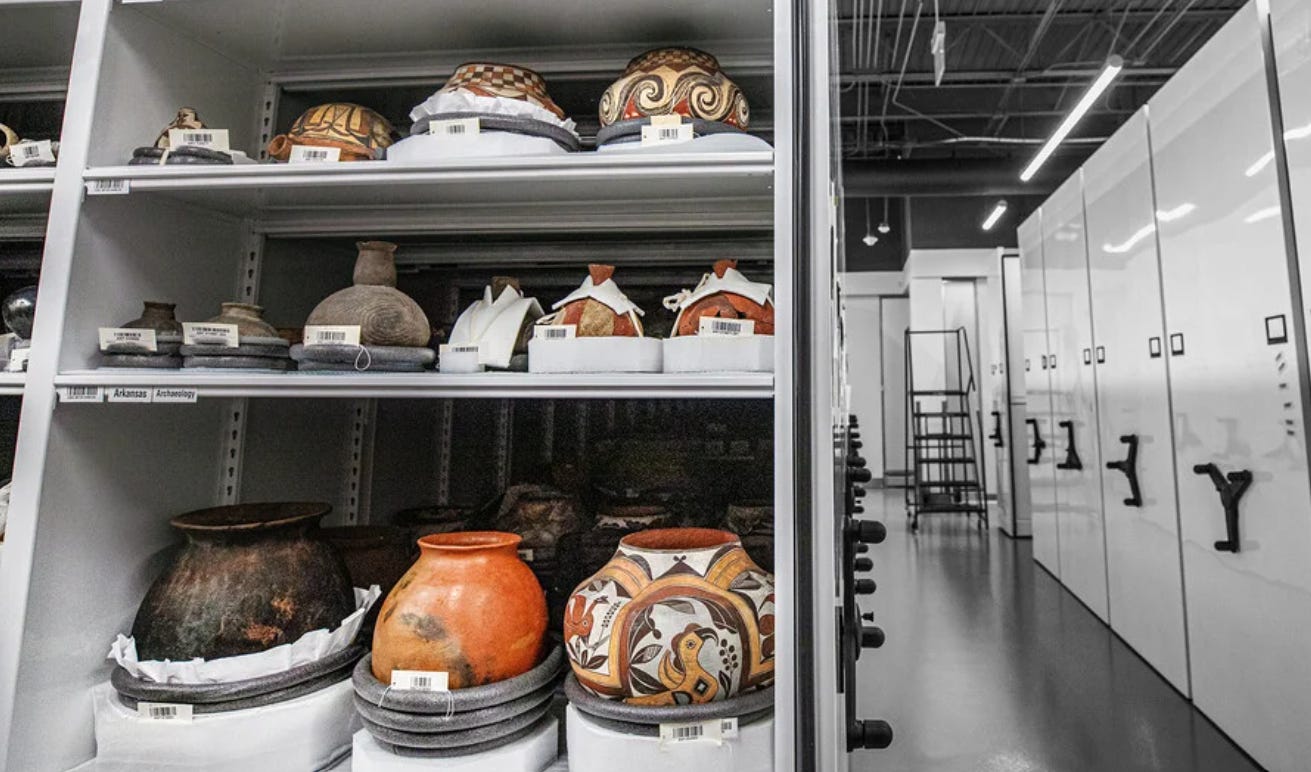
Thankfully, in December 2023, NAGPRA has been updated to address these loopholes and hopefully hasten the return of ancestors and sacred objects. As outlined in Native News Online, key changes include:
Putting the responsibility of initiating consultations with tribes on museums and institutions holding ancestors and sacred items rather than on tribes
Mandating deference to the Indigenous knowledge of lineal descendants and tribes
Elimination of the term “culturally unidentifiable”
Setting a time limit - museums and federal agencies have five years to re-inventory their collections and consult with tribes for return
Requiring museums and federal agencies to have free, prior, and informed consent before any exhibition of, access to, or research on human remains or cultural items
Unsurprisingly, this last requirement sent many museum curators scrambling to close exhibits nationwide. Other museums, however, had no worries about federal compliance because they did the right thing without a law telling them to: They took steps to work with tribal nations and updated their policies - and exhibits - with Indigenous leaders’ guidance.
“This is just a little piece of what NAGPRA is about, and if institutions were doing what they were supposed to do, this is not what they would have to do today,” said Shannon O’Loughlin, an attorney and chief executive of the Association on American Indian Affairs. “They would have already repatriated and educated the public more appropriately about who Native people are.”
One such museum was History Colorado.
Following a painful episode where tribal representatives were excluded from the design of an exhibit about the Sand Creek Massacre where US troops murdered about 230 Arapaho and Cheyenne children, elders, and women in 1864, Colorado History improved its collaboration with tribes. Now the museum works directly with tribal members on exhibits concerning their people and history. Today a new exhibit about the Sand Creek Massacre is available at Colorado History, one where even (and especially) the belongings on display are selected by Indigenous people.
“Because it [the Sand Creek Massacre] happened to the tribes, most people think, 'Well, that's tribal history,'" Otto Braided Hair, a Northern Cheyenne tribal member, said. "It's not, it's everybody's history. It happened in Colorado, so it's a history of Colorado. And then it's U.S. history. It belongs to the public and needs to be told."
Now History Colorado also accommodates tribal members’ requests for access to objects that are on display. One item on display at the exhibit is a staff with eagle feathers used by descendants of the Sand Creek Massacre’s survivors during ceremonies and at the annual healing run at Sand Creek Massacre National Historic Site. Afterward, the staff is returned to the exhibit which includes a description of the item’s past and current, living history.
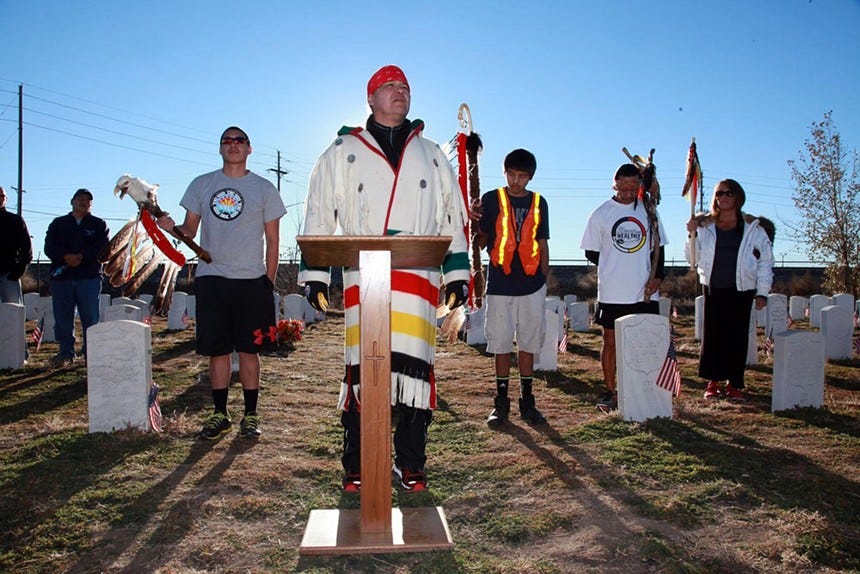
On its website, Colorado History states, “…as we move forward our practices may need to adjust or change as new guidance comes to light. We also recognize that consent today does not equal consent in the future and that consultation with Native American and Indigenous Peoples on how to present their histories is an ongoing process”.
“The NAGPRA process helps to heal the past by forging a path forward for the return of our Ancestors and the items placed with them upon burial.” - Deanna Byrd, NAGPRA Liaison of the Choctaw Nation
Unlike its neighbor Colorado History, the Denver Art Museum (DAM) was amidst the curator scramble. Like many museums nationwide, DAM updated its policies in January and removed Southeastern Indigenous ceramics from display. DAM continued to tout its “long history of working closely with Indigenous communities”, referencing how its internal policies were written in collaboration with Walter Echo-Hawk (Pawnee) and Jhon Goes in Center (Oglala Lakota). In 1994.
Twenty years later, DAM has gone viral.
“We’re not in the business of just giving away our entire collections. Nobody is.”
This is what DAM’s curator of Native Arts John Lukavic (non-Native) told investigative reporter Sam Tabachnik in an interview. Tabachnik has reported on DAM and repatriation requests for three years, including about a former DAM board member who had ties to antiquities trafficking worldwide. Only in March was it announced that DAM would return one such antique to Vietnam, a bronze dagger dated between 300 BCE and 200 BCE.
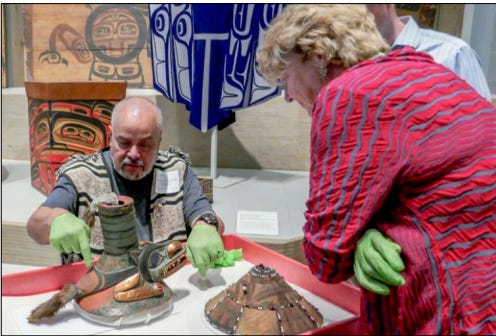
The Central Council of Tlingit and Haida Indian Tribes of Alaska submitted multiple requests to DAM and were rejected from taking home their own cultural items for over 20 years. In 2017, tribal delegates traveled over 2,000 miles from Alaska to Denver to speak with DAM.
“They are probably the worst museum” they ever dealt with, shared Tlingit and Haida Tribes Cultural Resource Specialist Harold Jacobs.
DAM withholds 325 items identified as Tlingit. While discussing a raven screen, DAM officials cited Hopi law for why they could keep the Tlingit object. “I was surprised by how rude and culturally insensitive the museum was towards the repatriation of some of these objects,” Father Simeon Johnson said. The vice chancellor for the Russian Orthodox Diocese of Sitka & Alaska, Johnson was invited to join the delegation as several delegates of the Tlingit & Haida Tribes are members of the church. “The general impression was, ‘You’re Indians; you’re all the same.’ Hopi customs and traditions are apples and oranges from Tlingit customs.”
Offensive - and extremely contradictory to Tlingit law and customs.
“A Tlingit individual acquires ownership to clan property through his/her membership in a clan,” Harold Jacobs explained in a repatriation request. “Ownership rights are not inherited or assigned independently of clan membership. A Tlingit gains access to property by virtue of the fact that he or she is born into a clan and is a member of a clan. Under Tlingit law, no descendible or alienable rights accrue to the individual member of the clan at the time the property vests. An infant has all the attendant power to use and own clan property in his/her own right. An individual clan member has the authority to "use" clan property, but he/she cannot independently transfer or alienate this right. This privilege ends at death, and thus inheritance right as recognized under American law does not exist in Tlingit law.”
Jacobs makes it clear that these cultural objects are key to revitalizing tribal languages, relearning family trees, and for use in ceremonies.
“We can write about it, talk about it, discuss it,” Jacobs said he told museum officials, “but until you see these objects in motion in our ceremonies, in our context, for which they were created, you will not understand why we need these objects back.”
Former President of the Wrangell Cooperative Association Xúns Richard Oliver, Kayaashkeiditaan clan, supports this. “It’s [repatriation] bringing back the culture and things that were forgotten. We would like to – some of these are priceless items that you wouldn’t use, but you could use it to carve more of them. And in Wrangell, people need to learn how to carve. We don’t have any master carvers here. We have this cultural center, and we would like to get carving again, bring it back to Wrangell.”
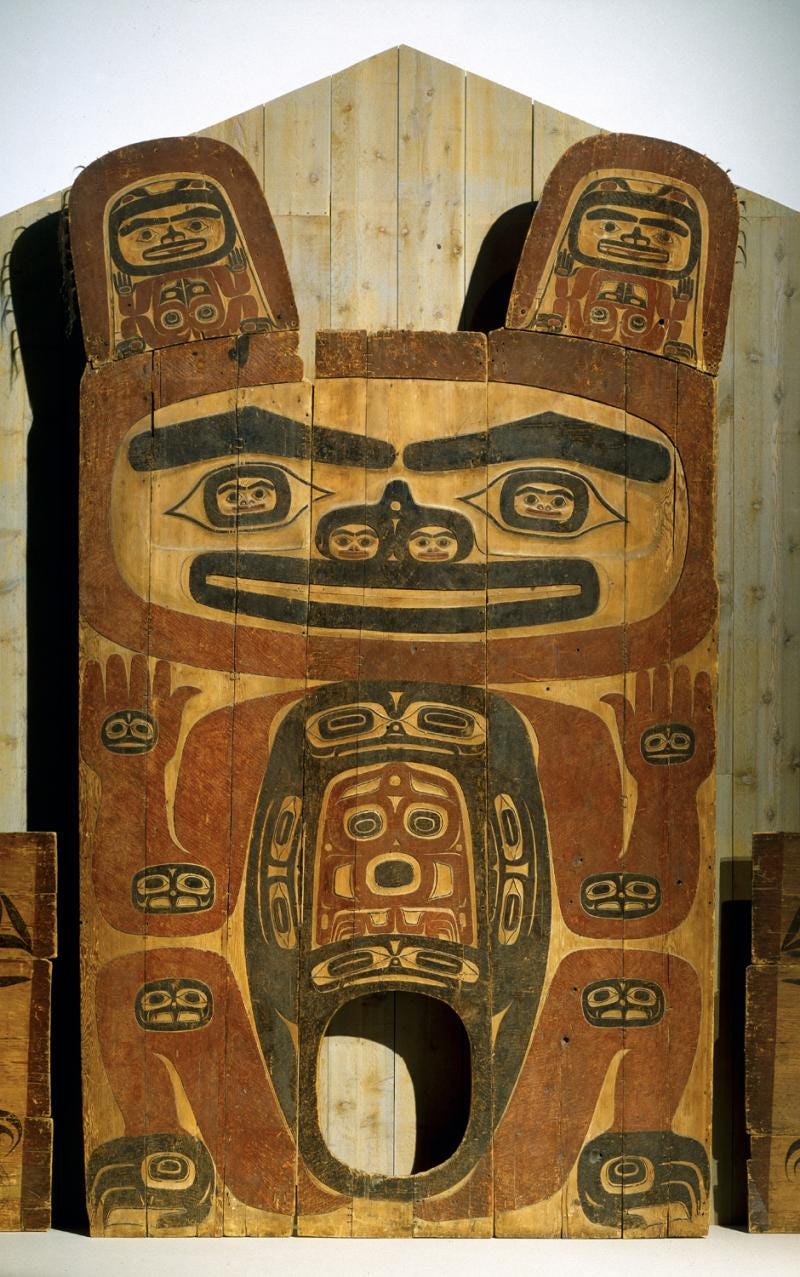
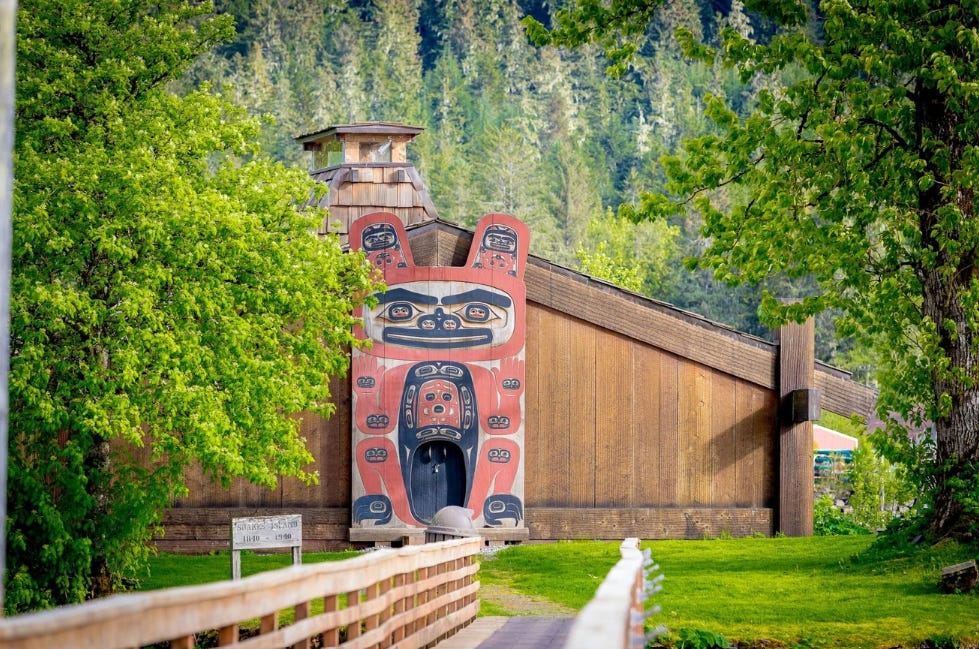
“Right now we’re working with the Denver Art Museum who’s really not wanting to budge,” Gaalgé Kevin Callahan, clan leader of the Naanya.Áayi and house master, said. “They have multiple objects there. One of the biggest objects they have is the Mother Bear, also called Many Faces, which is the screen that sits in front of the Shakes House.”
Over the years since 2017, the Tlingit talked extensively with DAM officials about a house partition belonging to the Tlingit Naanya.Áayi clan, originally a part of the home of Chief Shakes VI, whose names were Sheiyksh, Ltusháax´w, and Gúshtlein. Today it should still stand in front of the Naanya.Áayi clan’s longhouse. It is made from wood, paint, and human hair.
Now it sits in DAM’s collections while its likeness continues to make the museum money in their gift shop through postcard sales. In the “spirit of collaboration”, DAM offered to have a copy made for the Tlingit to take home instead. Sadly, when the Naanya.aayí clan’s longhouse was rebuilt in the mid-2010s, the tribe had to reach to DAM to assist in recreating the house partition for the sacred ceremony.
How does a museum thousands of miles away lay claim to such precious belongings and get to withhold them from a people? Indeed, how are so many things belonging to Indigenous people scattered worldwide?

Colonizers sell to colonizers who sell to colonizers. Antiquities trafficking trade is nothing less than the trafficking of cultures and histories. For early 20th-century wealthy white people, Pacific Northwest Indigenous art was all the rage. How else would Kwa̱nu’sila find itself in Chicago but not for James L. Kraft (yes, as in Kraft mac’n’cheese) and his donation?
Contrary to Tlingit inheritance laws, a Presbyterian minister ordered Chief Shakes VI to will his property to his widow instead of his maternal nephew in 1916. Consequently, everything ended up outside the clan. According to DAM’s database, the house partition was purchased from the widow (sadly could not find her name) by art dealer Walter C. Waters - who along with Axel Rasmussen obtained many Naanya.aayí clan objects. Through these two men alone, numerous Tlingit objects were scattered across museums, universities, and private collections across the world.
Just 6 years later, Austrian-Mexican artist Wolfgang Paalen purchased the Chief Shakes House Partition while traveling throughout British Columbia, and the Chief Shakes House Partition was transported far from home to Paalen’s own house in Los Angeles. It was from there that DAM purchased it from Paalen via Altman Antiques - a Los Angeles-based gallery of “Primitive Art” that also sold priceless cultural collections to the fucking British Museum. The Chief Shakes house partition was one of multiple Tlingit objects sold by Altman Antiques to DAM.
DAM has the gull not only to hold this sacred Tlingit item captive but in an article about the house partition, they refer to the Tlingit people in past tense. “The Tlingit were skilled artisans and master woodcarvers, known for their elaborate totem poles, bentwood boxes, and canoes,” it says as if Tlingit delegates have not personally visited the museum. It shows a failure to recognize that the objects withheld are part of living, breathing cultures, and their return is a central piece to true healing and reconciliation. In some cases, the absence of a cultural item can mean that traditional rituals and ceremonies cease.
Naanya.Áayi clan leader and house master Gaalgé Kevin Callahan described how a repatriated object allowed for the first mourning potlach in 84 years. “Without having a hat you couldn’t have a clan leader because if you have a hat somebody has to speak. So having the hat back I was able to sit as a clan leader now and then speak. We were able to cry and let our tears go and pay homage to all of our ancestors who have passed that we haven’t properly been able to cry for.”
After DAM went viral for their nonsense, there was (again) a non-apology - once again copy/pasting that their 1994 policies spiel, support spirit/ongoing efforts of NAGPRA, museum consultations “can be challenging,” blah, blah, blah. As the Tlingit people currently enjoy their annual Celebration, it will be some time before we may hear a public response from tribal leadership. In the meantime, please make sure to learn more about NAGPRA, the repatriation of worldwide artifacts, the history of Indigenous people, and how imperial systems continue to impact us all.
Precious sacred items and ancestors are but the tip of a dark iceberg of everything stolen and withheld from Indigenous communities throughout Turtle Island. Included in the long, long list: land, living children, language, bison, clothing designs, seeds, peach trees, tattoos, orcas.
There is no limit to colonial hunger and greed.
Archaeology and antiquities trafficking is not merely a means of erasing a culture. It is also a means of lying and creating a mythology for an occupying entity. It burns down ancestral villages and on their graves, it builds luxury condos and national parks. Since October 7, 2023, over 200 cultural heritage sites in Gaza have been destroyed. Long before then, Israel seized and continues to seize land, language, history, and artifacts.
Israel weaponizes archaeology as a tool for genocide.
Israeli authorities and their satellite right-wing settler organizations contradict the ethics of accepted practices to present a biased narrative, presenting findings as “biblical” or solely “Jewish”, and ignoring the land’s diverse multi-faceted history. According to Palestinian archaeologist Mahmoud Hawari, Israeli archaeological excavations fulfill two goals: First, appropriate and demolish hundreds of homes, forcibly displacing Palestinians further, and replacing them with Jewish settlers. Secondly, it is to create their narrative to justify its settler-colonial project and fabricate a claim over the land.
Israel kills and incarcerates Indigenous people of Palestine, stealing their homes, while flying in white Jewish teenagers on “birthright” trips and letting anyone with the right paperwork become an Israeli citizen, automatically signing them up for Israel’s universal healthcare. Then denies Palestinians ever existed.
“Is there a Palestinian history or culture? There is none," Israel’s Finance Minister Bezalel Smotrich in March 2023. He said this in Paris from a podium draped with Israel’s flag, emboldened with an image of so-called Greater Israel - a settler colonial vision to expand beyond Palestine and into the entire Levant region. "There is no such thing as a Palestinian people."
This came shortly after an artifact was returned to Palestine in January 2023, the first ever to be repatriated to the Palestinian Authority.
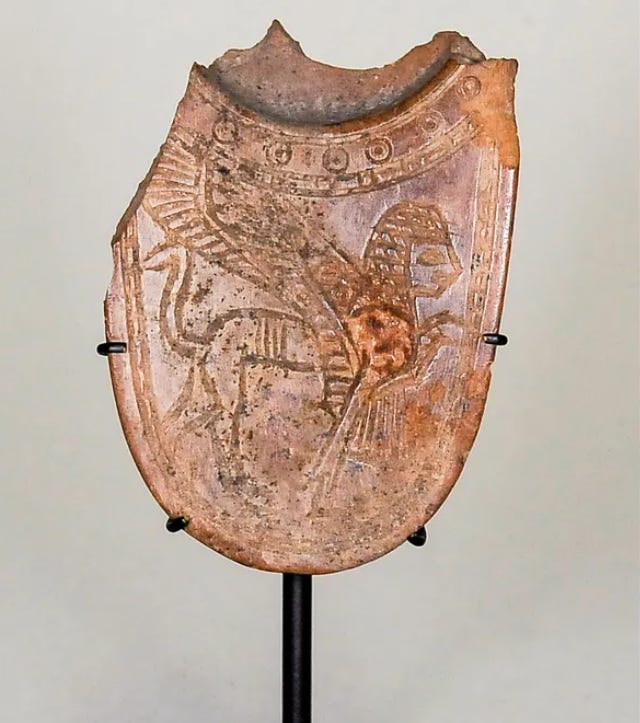
The artifact in question is an ivory spoon, dated between 800 and 700 BCE, and was once used to pour incense on fires as offerings to gods or the dead. The ivory spoon was one of 180 looted objects from 11 countries collected by billionaire Michael Steinhardt, surrendered to NYC authorities in 2021.
Palestine’s ivory spoon was callously sold to Steinhardt in 2003 for a mere $6,000 by Israeli antiques (looted artifacts) dealer Gil Chaya, owner of “Biblical Antiquities” in Jerusalem. (Artifacts sold by Chaya still proliferate the antique market, such as this Roman jug from the 300-400 CE on auction now.) The ivory spoon had no provenance - paperwork that would be a thin veneer of accountability, sharing where it came from and how it came to the seller’s possession - but Chaya himself admitted that it came from the village El-Koum in the West Bank.
“Any artifact that we know that comes out illegally from Palestine, we have the right to have it back,” said Jihad Yassin, director general of excavations and museums in the Palestinian Tourism and Antiquities Ministry. “Each artifact says a story from the history of this land.”

The historic repatriation on January 5, 2024, coincided with the first few weeks of Israel’s ultranationalist 37th government.
Of course, despite themselves receiving 39 of Steinhardt’s looted artifacts themselves, Israel threw a fit - ordering officials to examine the “legality” of the repatriation. Israel Heritage Minister Amichai Eliyahu - the same lunatic that declared Israel “must find ways for Gazans that are more painful than death” - ordered officials to examine the legality of the US government’s historic repatriation to the Palestinians. He then went on to state his intent to give the Israel Antiquities Authority full control over archaeological sites in the West Bank.
In August 2023, Eliyahu echoed Netanyahu’s 2019 plans and urged complete annexation of the West Banks, denying the Green Line’s existence. “We should advance this as quickly as possible, as smartly as possible. We should begin to say this everywhere, to create international recognition that this place is ours.”
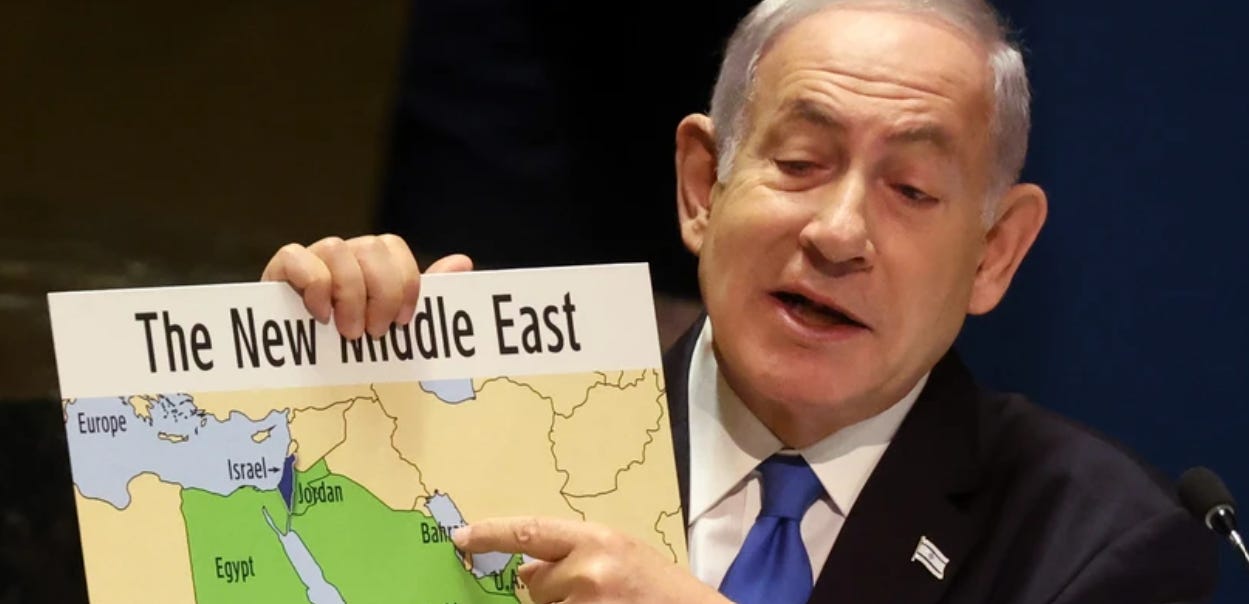
In September 2023, Netanyahu addressed the UN and shared two maps: The first was Israel as it existed in 1948 after the Nakba. The second was titled “the New Middle East” and engulfed the entirety of Palestine, including the West Bank, east Jerusalem, and Gaza.
Then, despite overarching Israeli surveillance and their wall holding Gazans in the world’s largest open air prison, October 7th happened. And Jewish religious fundamentalists declared it a “revolutionary moment” for Israel, seeing it as an opportunity to reoccupy Gaza. One of America’s own homegrown fascists Jared Kushner, Trump’s son-in-law and handpicked foreign policy advisor, praised Gaza’s “waterfront property” as very valuable real estate. “It’s a little bit of an unfortunate situation there, but from Israel’s perspective I would do my best to move the people out and then clean it up,” Kushner said.
In March 2024, Israel announced the largest seizure of Palestinian land in the West Banks since 1993. It has set anew in attacks on southern Lebanon, as it has done for decades, using depraved tactics like a medieval-style trebuchet weapon or US-supplied bombs disguised as children’s toys.
There have long been talks about a “Greater Israel” that swallows Palestine whole, even discussion of taking over neighboring Jordan and Lebanon. Today’s crisis in Gaza has reinvigorated Zionist ambitious terrorism, as Zionists openly talk about claiming land in Iraq, Egypt, Syria, and as far as Saudi Arabia.
“After Gaza and Hezbollah,” one Zionist online commenter said,“it will not be difficult for Israel. Saudi Arabia, Egypt, Syria, Lebanon, and Jordan will not pose a difficulty because Israel can overthrow the regimes in these countries easily, and controlling their lands will be easy after spreading the culture of normalisation and acceptance of Israel. No one will resist Israel like Gaza and Hezbollah resist it.”
In a perverted twist of Palestinian liberation’s call from the river to the sea, Zionists call it, “From the Mediterranean to the Euphrates.”
Again, there is no limit to colonial hunger and greed.
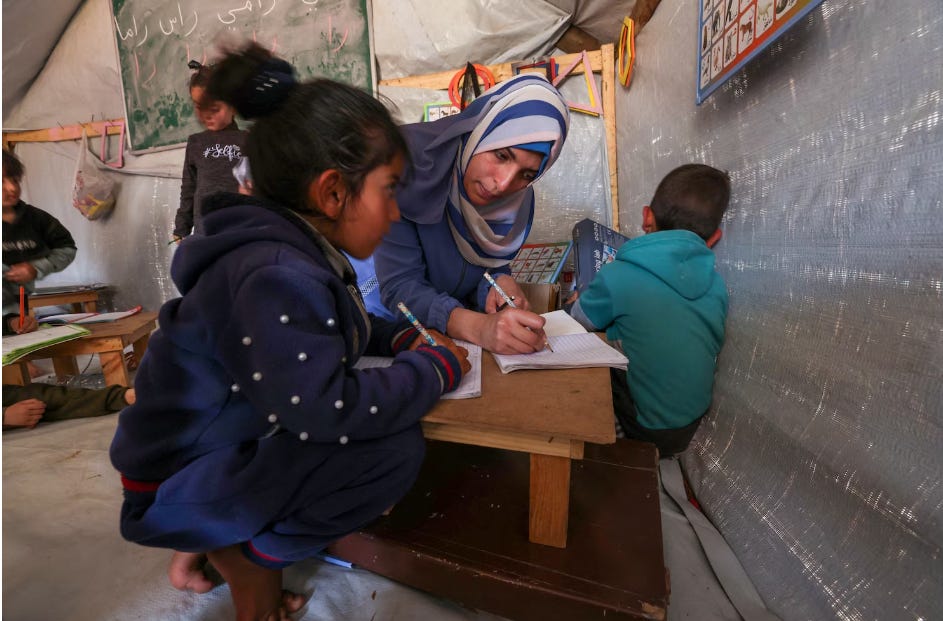
“Archaeology is often a mechanism of power. As such, its scholars have an obligation to speak up against oppression.” - Hilary Morgan Leathem
What does it mean to be Indigenous? How does one's relationship to the land inform our ideas about indigeneity? And how are the struggles of the Indigenous people of Turtle Island and those of Palestinians interrelated?
Listen to this episode of Upstream Podcast’s Palestinian series for a conversation with Krystal Two Bulls and Sumaya Awad.
“I am Amira Baalousha from Gaza. I had a beautiful family who loved life, but I lost them in the war.”
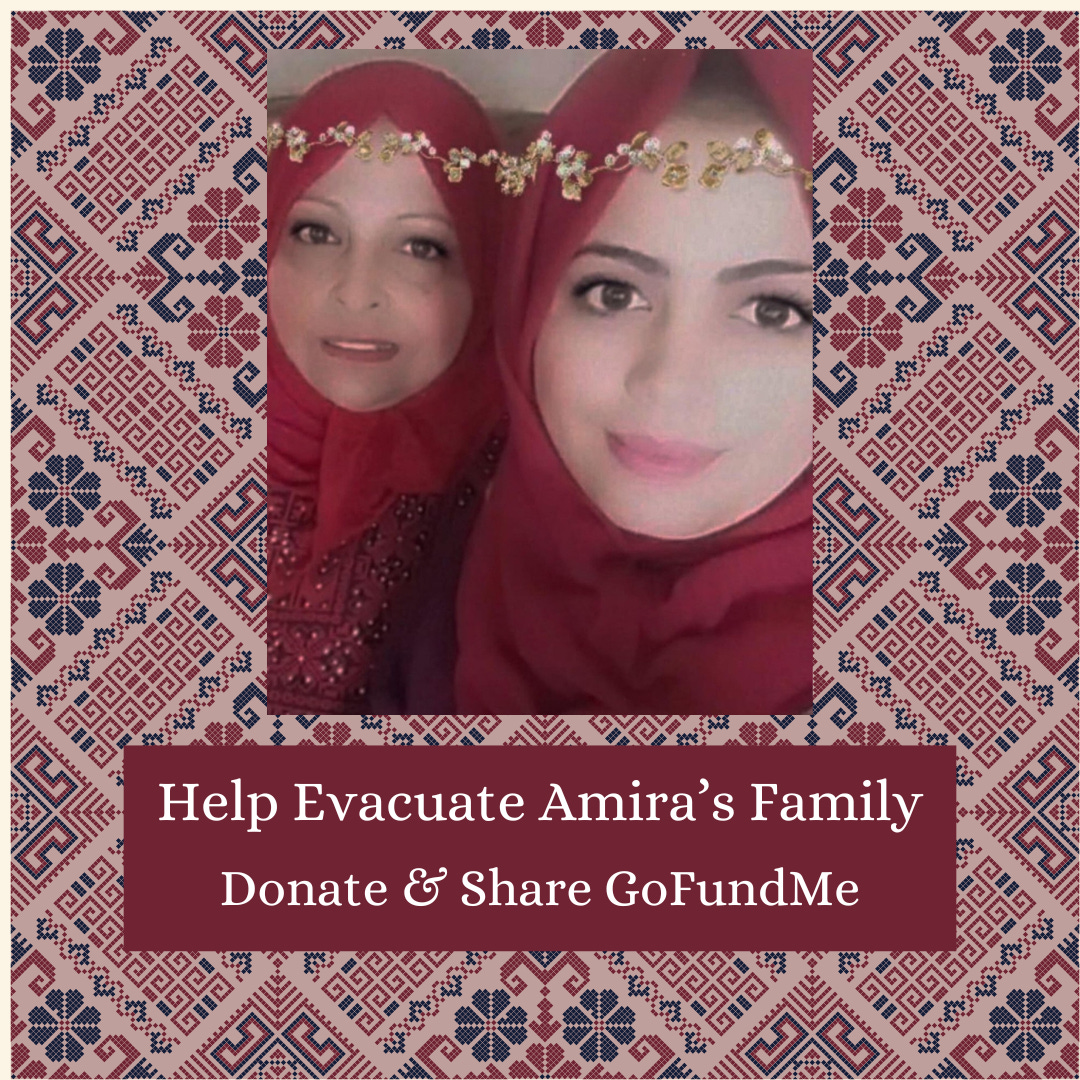

This is Amira Baalousha and her mother. Amira is a Palestinian woman currently living safely in Brussels, Belgium. Her mother was lost in Israel’s genocide in Gaza. In addition to her mother, Amira has lost her father, her sister, her friend, her sister-in-law, her niece and nephew, and others still.
Amira reached out to me, and she is reaching out to you: Please help Amira’s family evacuate from Gaza. Amira has three brothers alive in Gaza, and they need funding to evacuate themselves, their wives, and their children.
To leave their home in Gaza and find safety in Egypt, Amira’s family needs $5,000 per adult and $2,500 per child. Please donate here.
Amira and her family need €100,000 to evacuate. Their GoFundMe page is at less than €14,000 - enough only for two adults and one child. Let’s help them reach €100,000 and ensure everyone makes it to safety together.
Call to Action
Support Amira’s GoFundMe and find other Palestinian families to support Operation Olive Branch’s list.
Call your representatives and demand an immediate ceasefire in Gaza.
Hold weapons manufacturing corporations accountable for the profit they make from killing Palestinians. Here is a list of US corporations to get you started.
Show Danielle SeeWalker some love and show up at her artist talk at the Vail Symposium. If you cannot make it, consider purchasing her art and her book. Prints of G is for Genocide are available.
Subscribe to Birdie Sam’s Show Me Your Mask 🐉 . Birdie is a Tlingit Two-Spirit artist and storyteller, and it is their TikTok video shown earlier in the newsletter. They share content concerning the Land Back movement, climate justice, Indigenous advocacy, and ways we can all bully the rich. I’ve followed them since 2020 and cannot recommend them enough.
Hold the Denver Art Museum accountable on social media and send emails to comments@denverartmuseum.org. Beyond that, wait until there is a formal call to action from Tlingit leaders and always center Native voices in discussions of repatriation.
Research your local museums’ inventory and how they came by their artifacts. If you (likely) find one that was stolen, join its people’s calls for repatriations and write to the museum’s staff and board.